Direkt zum Inhalt

Operating the rowing machine with an orthosis or prosthesis

Assistive aid for exercises that require equally pulling and pushing.
Request product

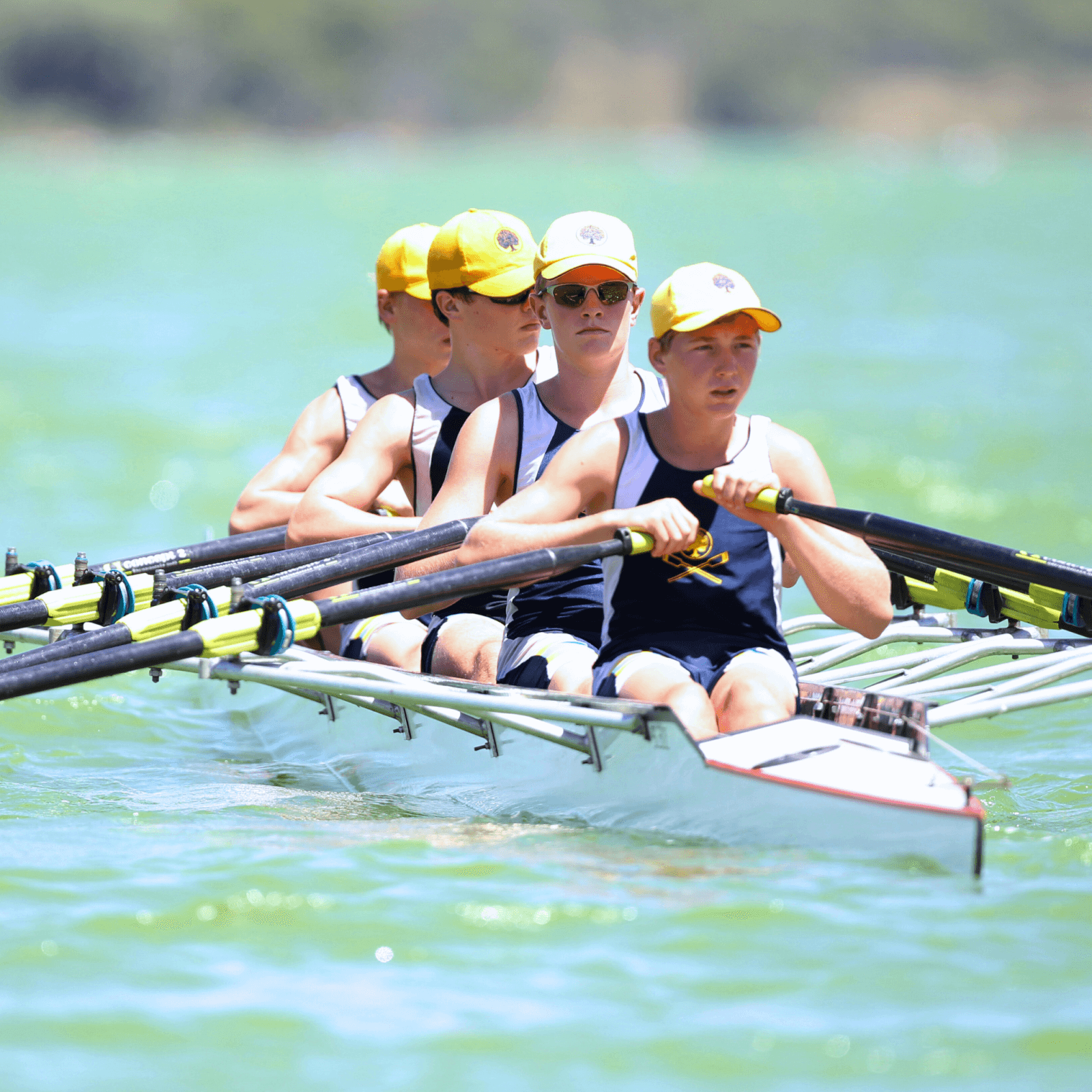
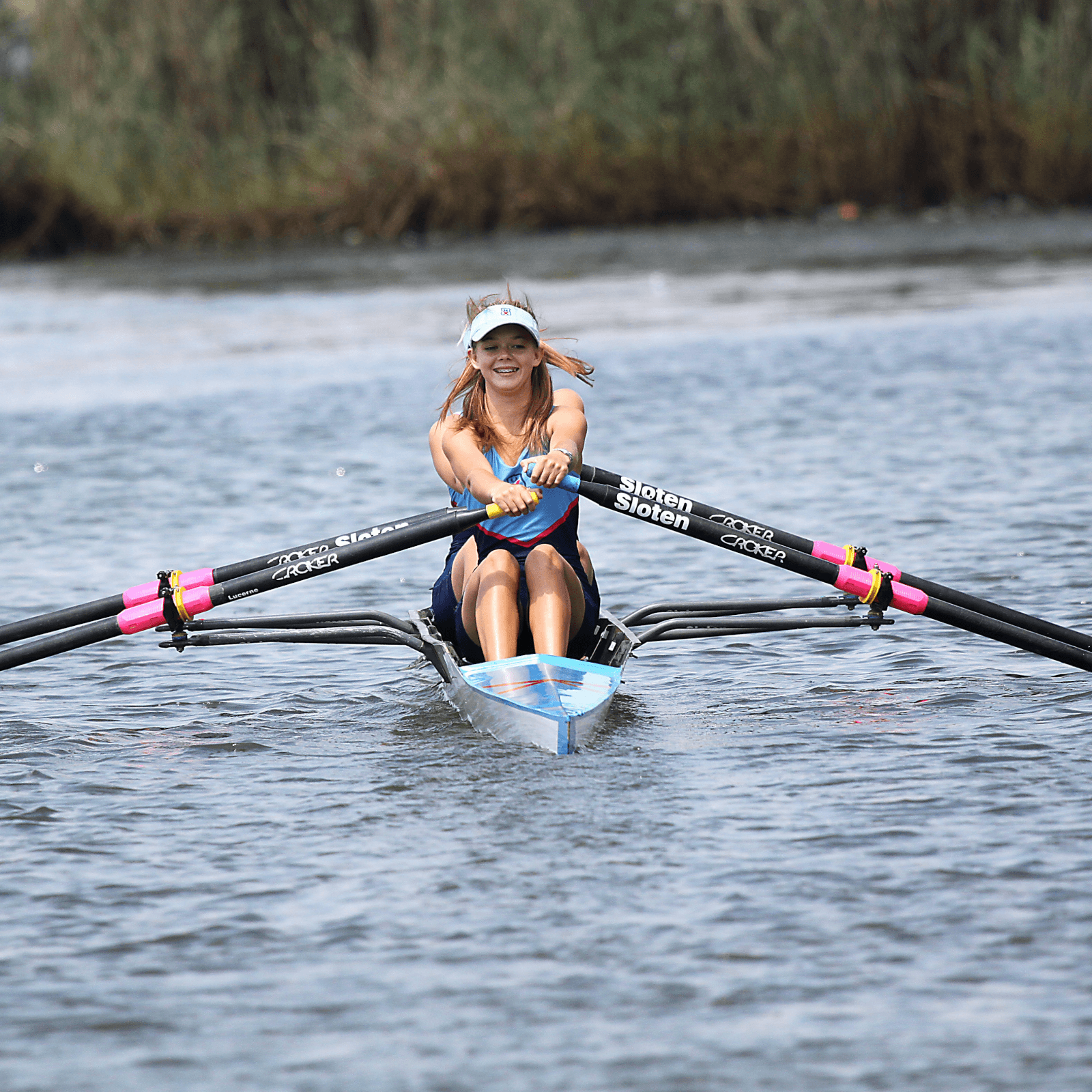
Rowing, on the water or on the machine at the gym, is one of the best full-body workouts there is: gentle on the joints, strong on endurance.

It lives and dies on the pull. Both hands have to stay locked to the handle through a powerful, repeated drive, and if one side slips, the stroke goes lopsided. When the grip on one side isn't secure, that's often the one thing keeping someone off the rowing machine. The right aid keeps the handle held on both sides, so your focus can stay on the stroke. Because rowers come to it differently, macu4 supports rowing across two systems, and which one suits you depends on your situation and the base that fits you best.
more information

How Lynk Modules Support This Activity 

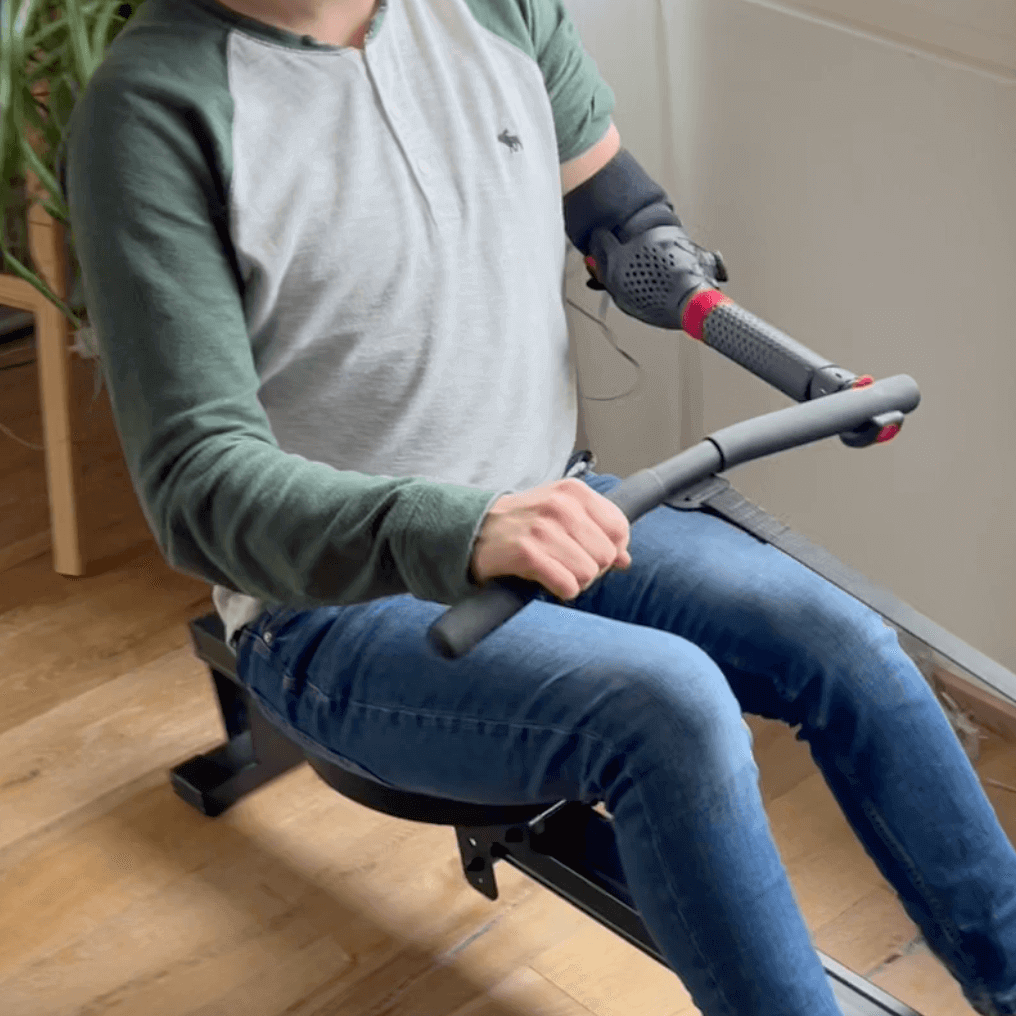
The Lynk System is suitable for orthotic support when grip function is not sufficiently reliable. The base encases the forearm in the form of a lightweight orthosis and provides a secure attachment point for the selected module. Depending on the handle, training equipment and individual requirements, the Push Module, Hook Module or Clic Lock Module can be used for rowing. The Push Module has a curved, flexible module head that adapts to the shape of a suitable handle. The handle is placed into the module head and secured with a hook-and-loop strap. The corresponding hook is held in position by magnets and a click-in mechanism. The module head can be turned slightly to the left or right, allowing the handle to be aligned with the arm position and the direction of pull during rowing. The Hook Module enables a handle, bar or strap to be held without the need for an active fist grip. The curved hook encloses the training equipment and supports the repeated pulling movement. To release it, the module can be gently rotated and moved away from the handle. The Clic Lock Module is attached to a compatible Clic head fitted to the rowing machine handle. Different Clic heads allow for different rotational movements and head shapes, enabling the system to be adapted to different handles and arm positions. The Lock version provides additional security for the connection and is designed to remain securely attached during repeated pulling movements. Various rotation settings allow the handle to be aligned at the required angle. By selecting different Clic Lamellas, the required release force can also be adjusted to suit the specific application. All three modules support secure holding of the handle on the affected side and reduce the need for active gripping. This allows the rowing movement to be performed with greater control and consistency, while helping to reduce unnecessary compensatory movements and one-sided strain.
more information

Explorer Modules

How Explorer Modules Support This Activity

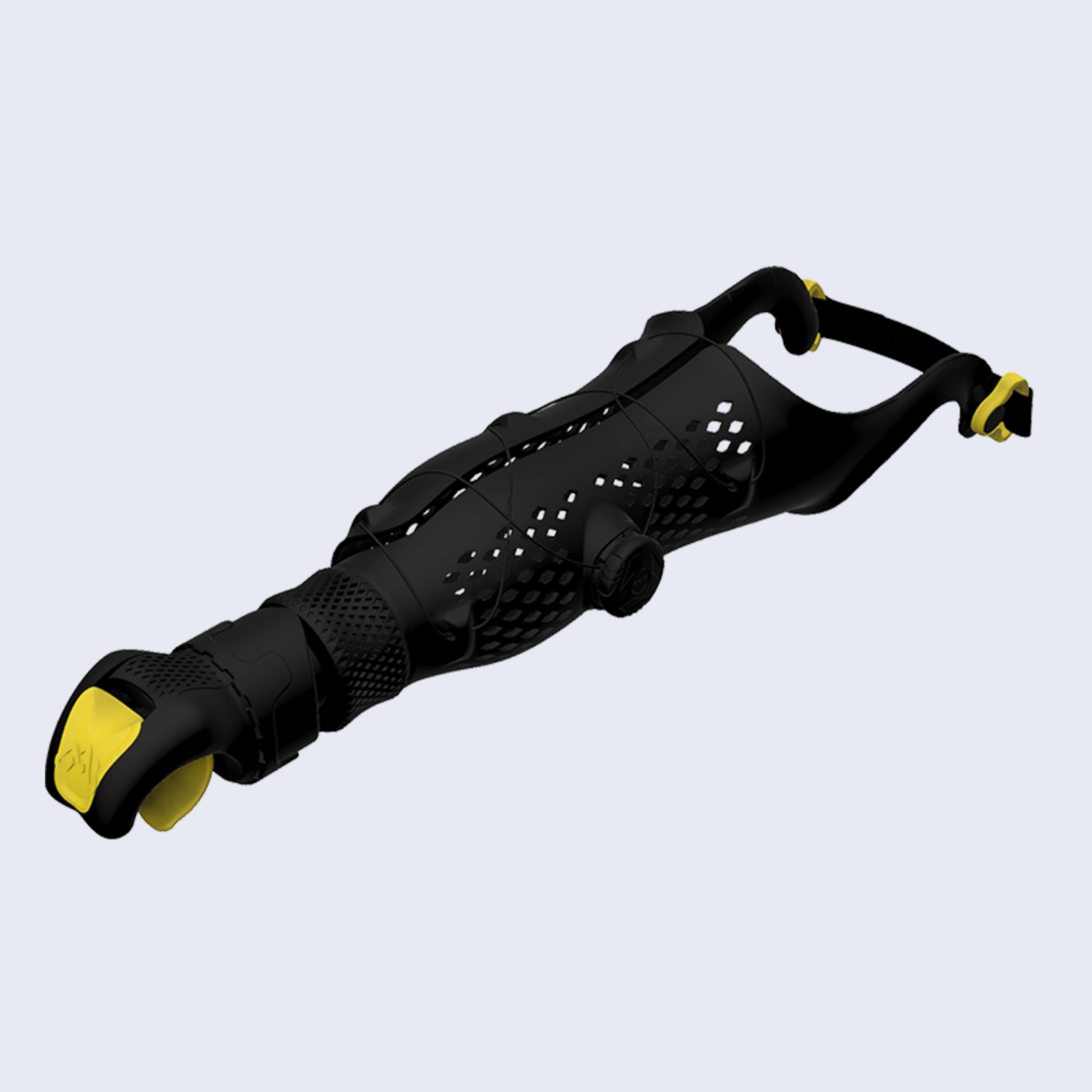
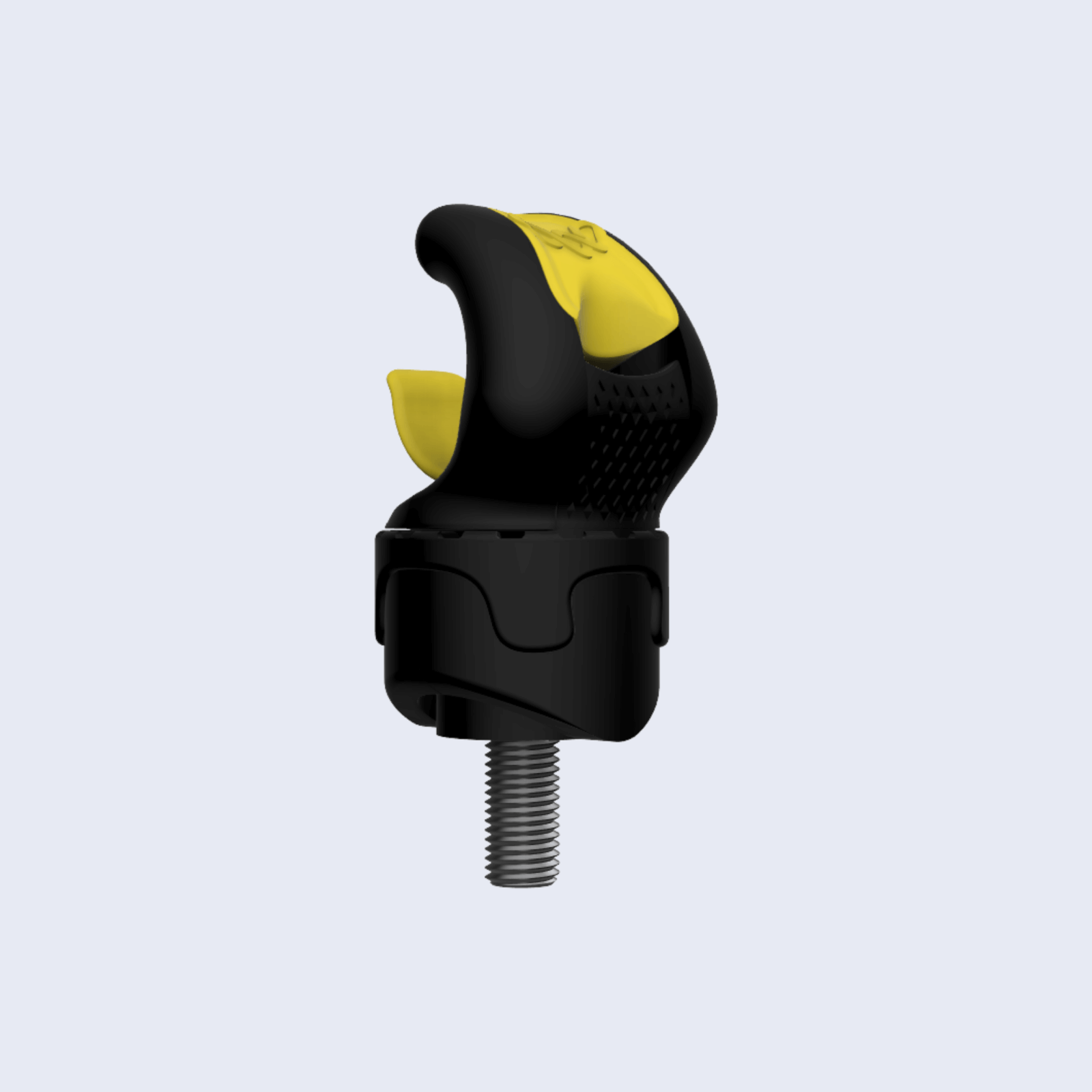
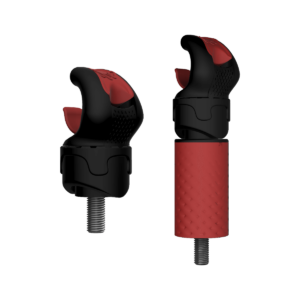
The Explorer System with the Bike Module is suitable for prosthetic fitting of the forearm in adults. macu4’s lightweight, 3D-printed Explorer System consists of a socket, the Explorer Ring as a connecting component, and a module for the relevant activity. When rowing, the Bike Module enables attachment to the handle of a rowing machine or another suitable training handle. The orientation of the module can be adjusted to suit the position of the handle and the individual arm position. Using the slide button, the joint can be unlocked, moved into the required angle and then securely locked back into place. The integrated joint and rotation function allow the module to follow the natural path of movement during the pulling and recovery phases without holding the arm in a rigid position. The module can be easily attached to and detached from the socket and can be used on handles and bars with different orientations. It is available in two sizes for smaller and larger handle diameters and can be configured with or without length compensation using an integrated spacer. The appropriate configuration is determined during the measurement process. When the handle is held securely and aligned appropriately on both sides, the rowing movement can be performed more evenly. This supports controlled force transfer and may help to reduce one-sided compensatory movements in the arm, shoulder and upper body.

more information

"For Ralf, training on the rowing machine is an important part of his exercise routine. He can attach the module perfectly to the handles and perform the rowing motion comfortably."

User | 18 year old Ralf
Go to case studies

No suitable module available for your system?

Please feel free to contact us! Perhaps a customised product is possible – or a new module is already in development that is perfectly suited to this activity.
Contact us
linkedin facebook pinterest youtube rss twitter instagram facebook-blank rss-blank linkedin-blank pinterest youtube twitter instagram